Industry · Jewellery
Jewellery website design, for jewellers and brands.
Jewellery website design starts with the catalogue. It is made of variants: metal, chain length, ring size, type of fastening. It often includes one-off pieces, photos of small, shiny objects, and sometimes a personalisation that Shopify’s native variants cannot handle. Lyvora designs and builds these stores on Shopify. For Mayalice, we built six configurators with a live preview and stock tracked component by component; we also created the stores of Chacréa and La Petite Pie. Independent maker, established brand or fine jeweller: the structure of the catalogue comes before the mock-up.
Jewellery stores on Shopify



Four profiles, four stores.
The same platform, different goals. Choose the profile closest to yours.
Independent maker
Objectif
Move from markets, Instagram or a marketplace to a store of your own, without spending your evenings on it.
- Publics
- Customers who found the brand at a fair or on Instagram
- Gift buyers, in the run-up to the holidays
- Loyal customers waiting for new pieces
- Key pages
- A home page that presents the workshop and the latest collection
- Collections by type of jewellery
- Product page with a worn photo and a sense of scale
- Workshop page: materials, making, care
- Conversion
The online order, and sign-ups to the newsletter that announces new releases.
Personalised jewellery
Objectif
Let customers compose their piece online, and receive complete orders at the workshop, with no back-and-forth by email.
- Publics
- Customers giving a piece with an initial or a name
- Gifts for a birth, a wedding, Mother’s Day
- Customers who come back to add to a piece, charm after charm
- Key pages
- Configurator with a live preview
- Product page that explains each possible choice
- Cart that sums up the composition
- Page on making, lead times and returns for a personalised piece
- Conversion
An order that reaches the workshop complete, composition and preview included.
Established brand
Objectif
Run a wide catalogue, several collections a year and other sales channels, with a store the team manages on its own.
- Publics
- Customers comparing with the big retailers
- Stockists and partner shops
- Customers abroad
- Key pages
- Collections filtered by metal, stone and type of jewellery
- Product pages fed by metafields: material, dimensions, care
- Collection pages written for search
- Stockist form or trade area
- Conversion
The online order, and qualified enquiries from stockists.
Fine jewellery
Objectif
Present pieces in precious metal or set with stones, and lead to an appointment or a bespoke enquiry as much as to an order.
- Publics
- Couples preparing an engagement or a wedding
- Customers looking for a one-off or bespoke piece
- Buyers who want to know the metal’s fineness and where the stones come from
- Key pages
- Detailed product pages: metal, fineness, stones, dimensions
- Bespoke page with an enquiry form
- Appointment booking at the workshop or by video call
- Ring size guide
- Conversion
The request for an appointment or a bespoke quote, then the order.
Five challenges for a jewellery store.
What costs a lot when it is discovered after launch, and how we deal with it.
-
Enjeu 1 : A catalogue made of variants
The problem
The same design comes in gold and silver tones, in several lengths, with hooks or clips. Fifteen colourways stacked as variants of a single product give one page, one photo in search results, and no chance of being found for a specific colourway.
Our answer
The splitting rule is set at scoping: what the customer chooses after finding the design stays a variant, what she searches for directly gets its own product page. Collections and filters follow the same rule.
Indicateur suiviVisits from search, by type of jewellery and by colourway
-
Enjeu 2 : Personalisation beyond variants
The problem
An engraved name, a choice of charms, a combination of stones: native variants soon reach their limits. The details arrive by email, and every order is checked by hand before assembly.
Our answer
A configurator built into the theme, with a live preview, and stock decremented component by component. That is what we built for Mayalice, without touching Shopify’s checkout or shipping.
Indicateur suiviShare of personalised orders processed without manual rework
-
Enjeu 3 : Photographing small, shiny objects
The problem
A piece of jewellery is small, reflective and three-dimensional. Without a sense of scale, a customer cannot tell whether an earring measures two or eight centimetres, and the disappointment ends in a return.
Our answer
Product page templates set the order of the visuals: cut-out photo for the thumbnail, worn photo, photo that shows the scale, close-up. Formats and framing are decided before the photo shoot, not after.
Indicateur suiviReturn reasons linked to size or appearance
-
Enjeu 4 : The one-off piece that sells
The problem
When stock is one, every sale makes a product page obsolete. Deleted, it loses the visits it was getting and breaks the links shared on Instagram.
Our answer
The sold page stays online, marked as sold, with available pieces in the same style and a back-in-stock alert. Grouped releases are prepared in the editor and published on the announced date.
Indicateur suiviVisits to sold pages that go on to another piece
-
Enjeu 5 : Wording regulated by law
The problem
In France, terms such as ’plaqué or’ (gold-plated), ’vermeil’ or ’925 silver’ have a regulatory definition, and nickel is restricted for anything that touches the skin. An inaccurate term, copied from page to page, exposes the brand.
Our answer
Material, metal fineness, finish and care are structured fields on each product, filled in once and shown in the same place on every product page. Your team updates them without touching the theme.
Indicateur suiviProduct pages with complete material and care fields
The usual approach, and ours.
| Sujet | Approche courante | What we do |
|---|---|---|
| Catalogue | Each new colourway added as a variant of a single product. | A variant or separate-page rule set at scoping, applied to collections and filters. |
| Personalisation | A free text field, then the details sorted out by email. | A configurator with a live preview, linked to the stock of each component. |
| Photos | Formats chosen after the shoot and cropped case by case. | Product page templates that set the order and format of the visuals before the shoot. |
| One-off pieces | The product page deleted after the sale. | The page kept online, marked sold, with pieces in the same style. |
| Materials and wording | Written by hand in each product description. | Structured metafields, shown the same way on every product page. |
| Theme | An off-the-shelf theme, topped up with apps to fill the gaps. | A custom theme that contains only what the catalogue needs. |
Jewellery stores delivered.
Stores online today, with real screenshots.
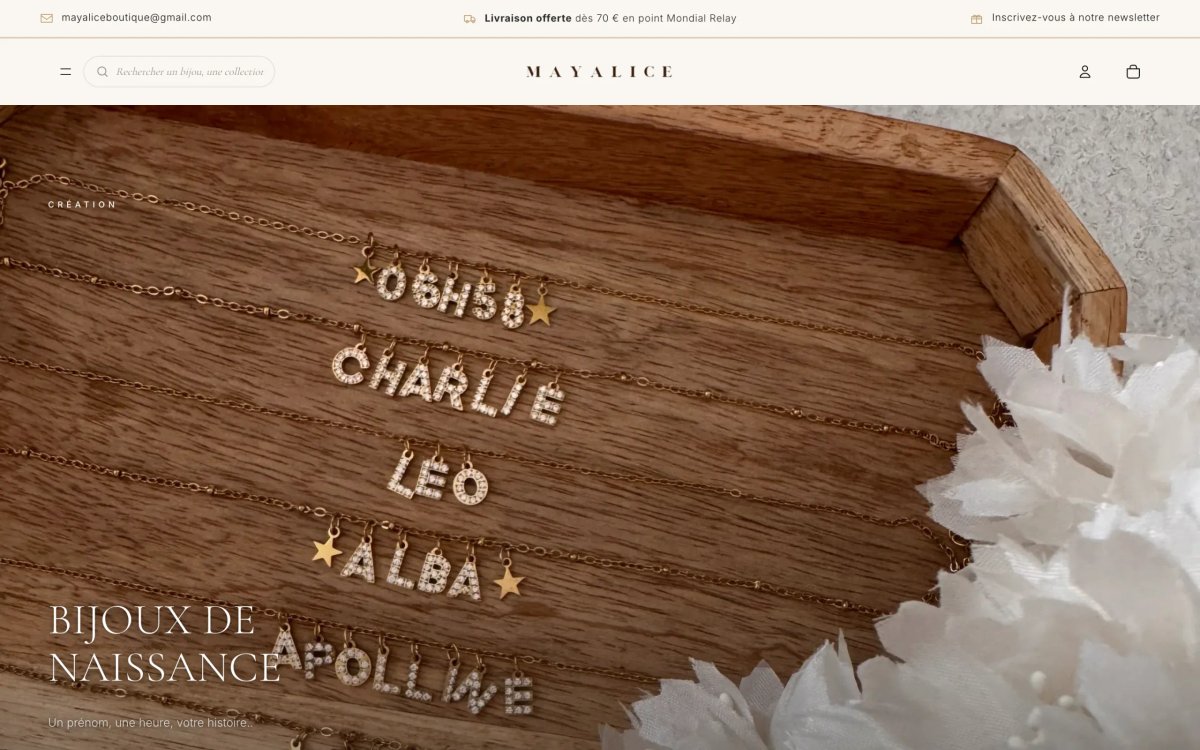
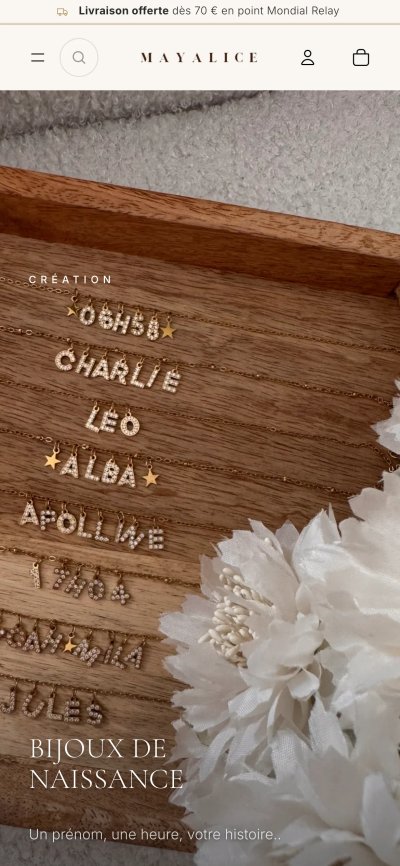 MayaliceRedesign and six configurators: name necklaces, bracelets, bolas, single charms. Stock unified between the finished piece and its components.Read the case study
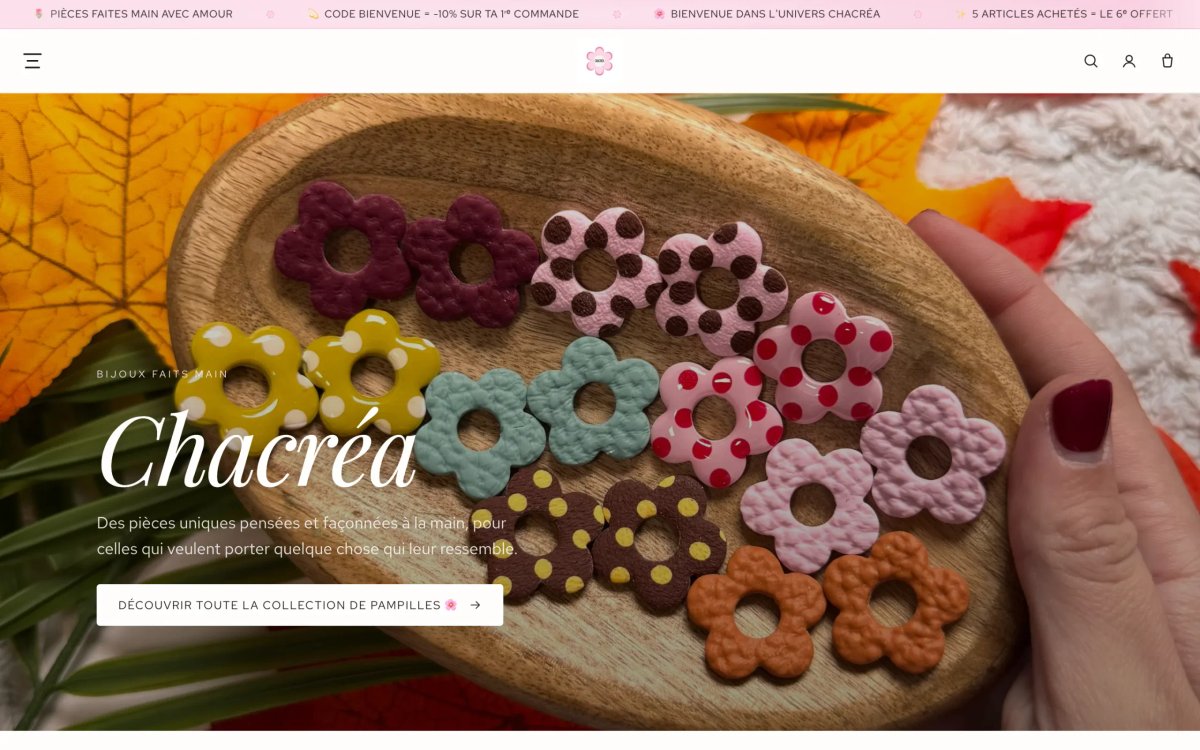
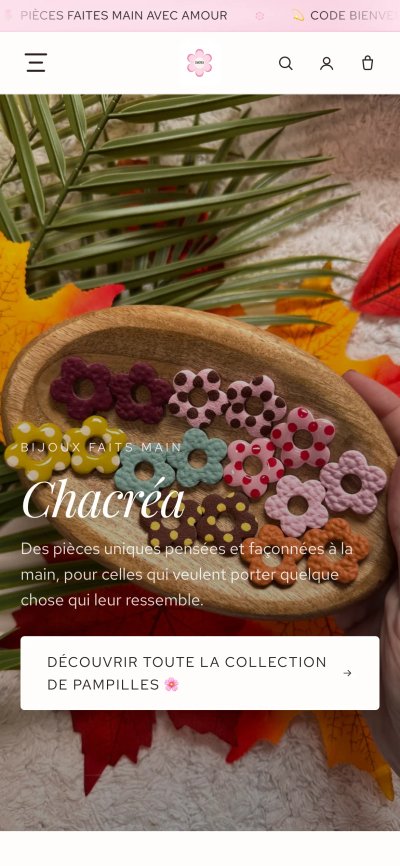 ChacréaFlower-shaped rings, earrings and charms. Shopify store build.chacrea.fr (opens in a new tab)
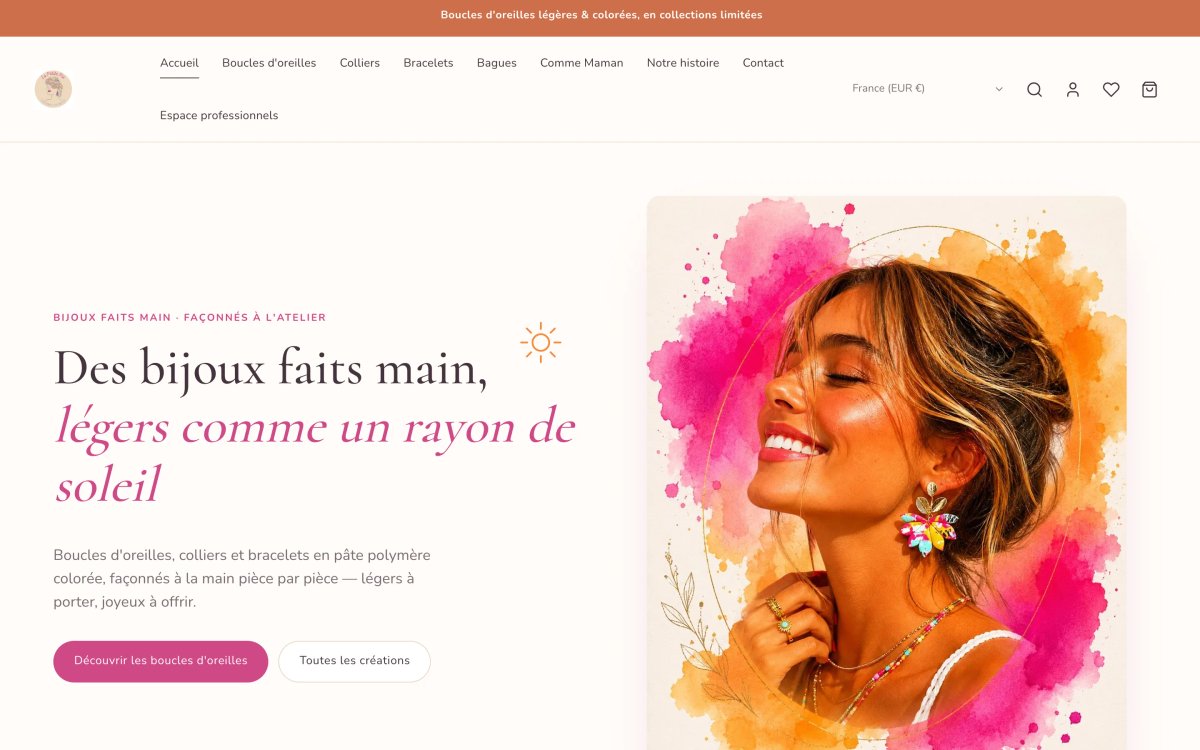
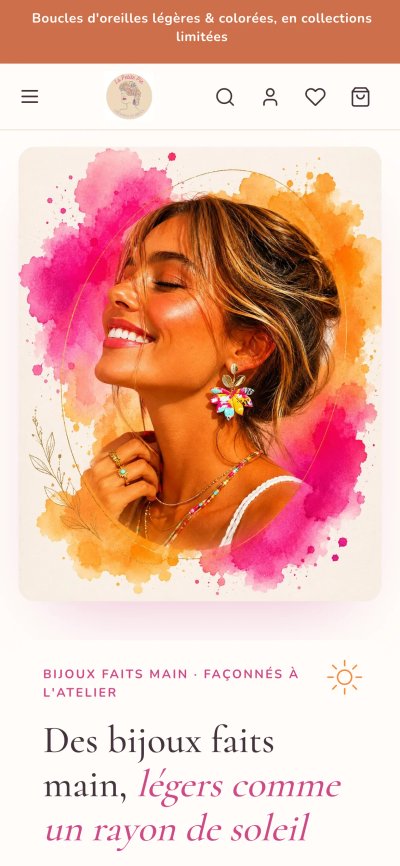 La Petite PieFlower and tassel earrings. Shopify store build.lapetitepie.com (opens in a new tab)
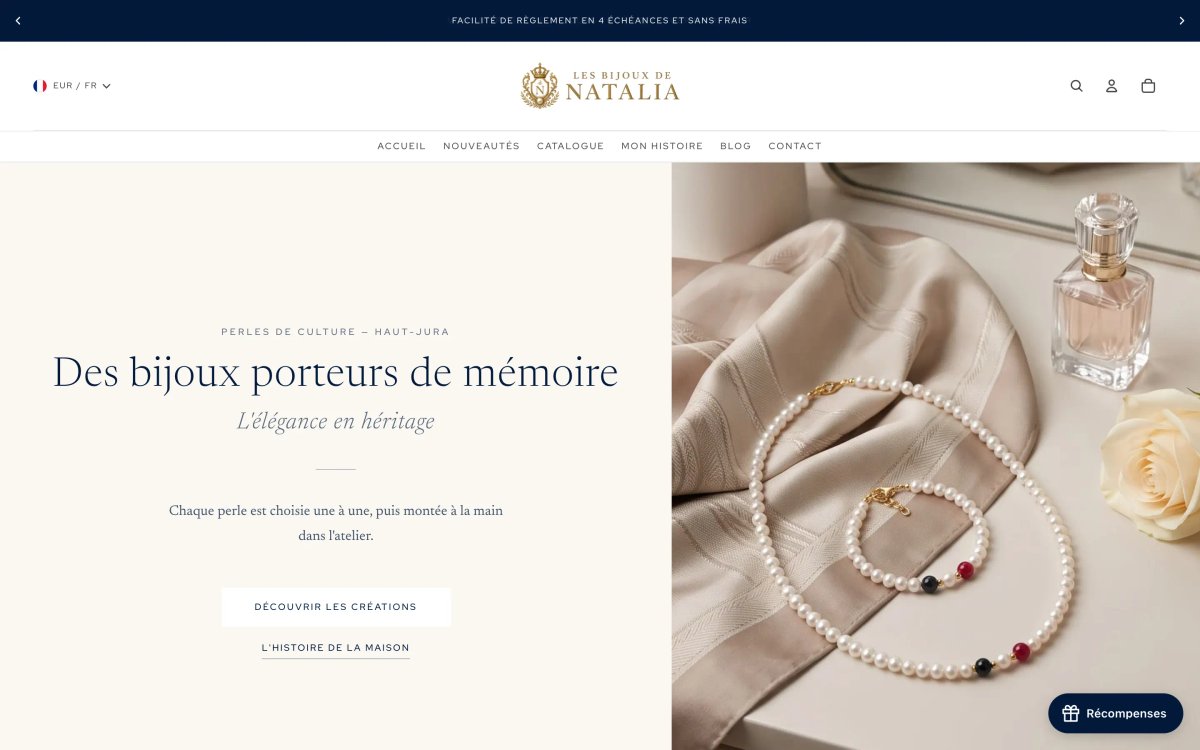
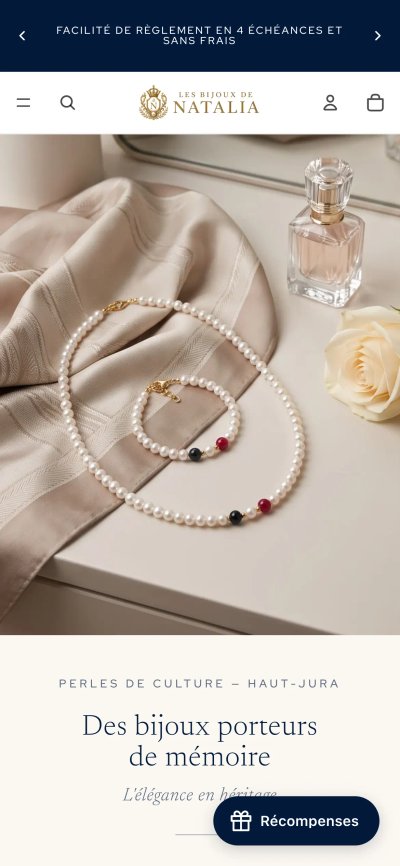 Les Bijoux de NataliaGold-tone jewellery and beads, on a Shopify store.lesbijouxdenatalia.com (opens in a new tab)



Method in four stages.
The same for every industry. Each stage ends with your approval.
-
Step 1: Scoping
We start from your catalogue, your customers and your sales channels. Scoping sets the structure of the collections, the information each product carries and the journeys to build.
-
Step 2: Design
The pages that carry the sale are designed for mobile and desktop. You review and comment on them screen by screen in Webcosa Aperçu.
-
Step 3: Development and catalogue
The theme is custom-built, the catalogue imported and checked, payments and shipping set up in Shopify.
-
Step 4: Launch
Test orders, redirects in the case of a migration, analytics checked. Then we show your team how to keep the store running.
Frequently asked questions
What does jewellery website design include?
Scoping the catalogue (variants, collections, material information), designing the pages that carry the sale, developing the theme, importing the products, setting up payments and shipping, then search work on collections and product pages. Personalisation or a configurator is added when the catalogue calls for it. The exact scope is written into the quote.
Is Shopify suited to a jewellery store?
Yes. Shopify handles variants, collections, stock and payments, which covers most of a jewellery catalogue. Its limits show with advanced personalisation and stock tracked by component: these are handled by development in the theme, without changing platform.
Can you sell personalised jewellery without a paid app?
Simple engraving fits in a product option. Beyond that, a configurator built into the theme avoids an app subscription and follows your components exactly. For Mayalice, the six configurators are custom-built and synced with the Shopify admin.
One product page per colourway, or variants?
If the customer searches directly for a colourway or a motif, it deserves its own page, photos and title. If she chooses a detail after finding the design, such as a chain length or a type of fastening, it is a variant. The rule is set at scoping, before the catalogue is imported.
How should the material and care of each piece be presented?
In metafields: material, metal fineness, finish, dimensions, care advice. They are filled in once per product, appear in the same place on every product page and feed the filters. Regulated terms, such as ’plaqué or’ (gold-plated) or ’vermeil’ in France, are written exactly as your supplier guarantees them.
Can you take over an Etsy or Wix store?
Yes, that is a migration. Products and their photos are carried over; customers and order history are too, when the original platform allows them to be exported. When the old site had its own addresses, as on Wix, each one is redirected to the new one to keep the search rankings already earned.
Your jewellery store, starting with a call.
A first conversation is enough to know whether your project is a build, a redesign or a migration. It is more useful if you have in mind:
- The number of designs, and what makes them vary: metal, size, length, colourway
- What can be personalised, and how those orders reach you today
- Your current sales channels: markets, Instagram, Etsy, stockists
- Two or three jewellery stores whose journey you like